
SEO can be a rewarding career because it combines marketing, technology, psychology, content, analytics, research, and business strategy.
But starting an SEO career can also feel overwhelming.
A beginner quickly encounters terms such as:
- crawling
- indexing
- search intent
- keyword research
- technical SEO
- backlinks
- structured data
- analytics
- Core Web Vitals
- content strategy
- conversion tracking
Then there are dozens of tools, conflicting opinions, algorithm updates, AI-generated advice, and job descriptions asking for experience beginners do not yet have.
The good news is that you do not need to master everything at once.
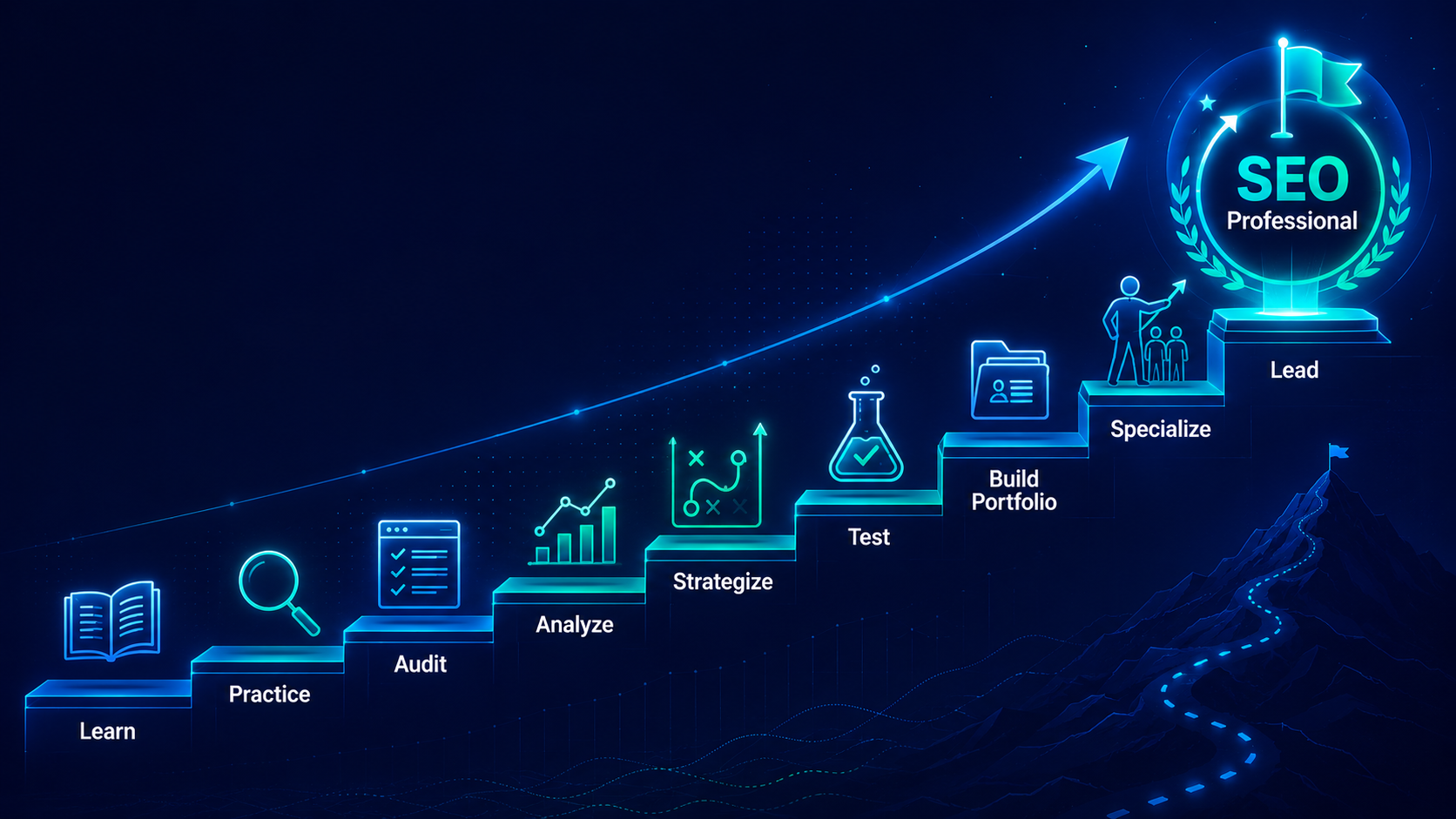
A strong SEO career is usually built gradually:
Learn the fundamentals → Practice on real websites → Measure results → Build evidence → Specialize → Keep learning
The goal of this guide is to show you how to move from understanding basic SEO concepts to becoming someone who can confidently diagnose problems, create strategies, execute improvements, communicate results, and build a long-term career in organic search.
What Does an SEO Professional Do?
An SEO professional helps websites become more discoverable and useful through organic search.
That can involve much more than inserting keywords into articles.
Depending on the role, an SEO professional may work on:
Keyword and Audience Research
Understanding:
- what people search for
- why they search for it
- which topics matter to the business
- which pages should target specific needs
Content Strategy
Planning:
- pillar pages
- supporting articles
- landing pages
- content updates
- internal linking
- topic clusters
On-Page SEO
Improving elements such as:
- titles
- headings
- content structure
- search intent
- internal links
- images
- URLs
Technical SEO
Investigating:
- crawling
- indexing
- redirects
- canonicals
- XML sitemaps
- JavaScript
- website architecture
- performance
Authority Building
Developing strategies for:
- backlinks
- digital PR
- brand mentions
- partnerships
- useful resources
Measurement
Using data to understand:
- impressions
- clicks
- rankings
- landing pages
- conversions
- revenue
- organic growth
Communication
Explaining:
- what happened
- why it happened
- what should happen next
The strongest SEO professionals eventually learn how these areas connect.
Is SEO a Technical Career?
SEO can be technical, but you do not need to become a software engineer to build a successful career.
SEO exists on a spectrum.
Some professionals specialize heavily in:
- crawling
- JavaScript
- log-file analysis
- rendering
- migrations
- structured data
- large website architecture
Others focus more heavily on:
- content
- keyword research
- search intent
- editorial strategy
- digital PR
- ecommerce
- local SEO
A beginner should understand the fundamentals across the entire discipline before specializing too early.
If you are still learning the basics, start with SEO Fundamentals and build outward from there.
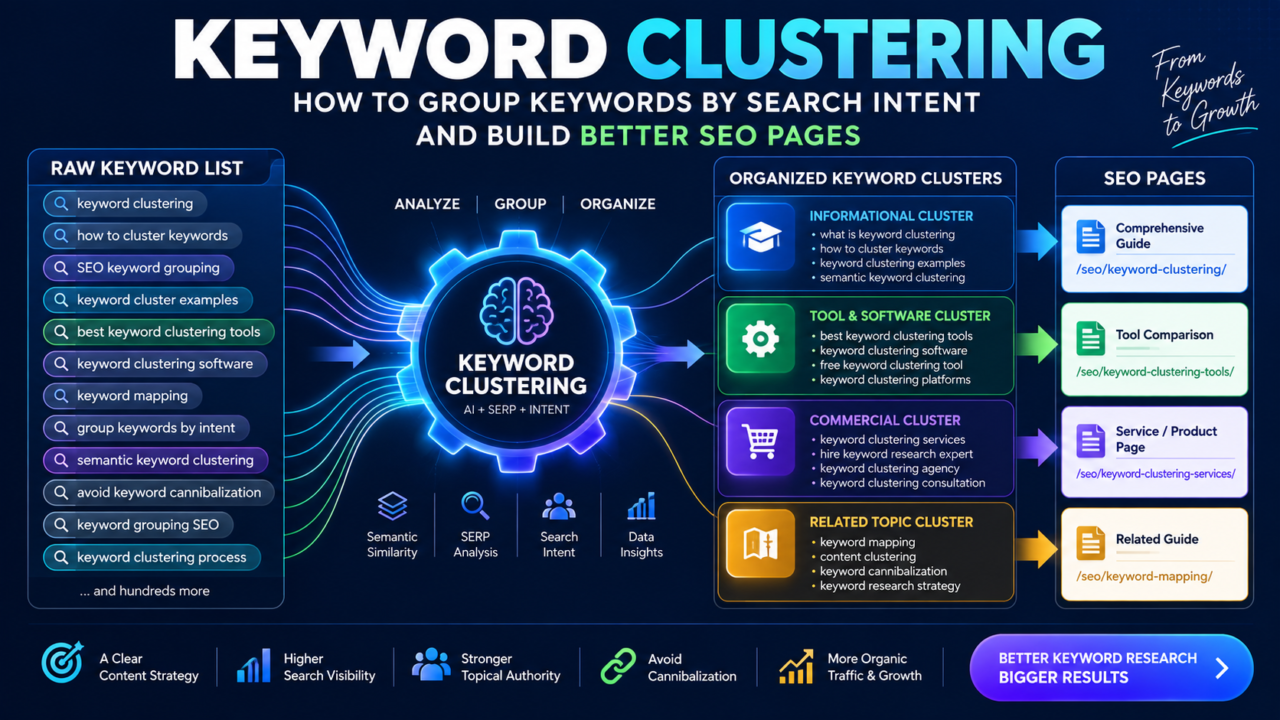
12 Steps to Build a Strong SEO Career
Step 1: Learn How Search Engines Actually Work
Before learning tactics, understand the system you are trying to optimize for.
You should know the basic journey from:
Discovery → Crawling → Rendering → Indexing → Ranking → Search Result
Without this foundation, many SEO recommendations become difficult to evaluate.
For example, someone may say:
This page is not ranking.
But the real problem may be that the page is not indexed.
Or:
Google ignored our new content.
But perhaps the page has very weak internal discovery.
Understanding these differences makes you a better problem solver.
Study concepts such as:
- crawling
- indexing
- robots.txt
- noindex
- canonicals
- redirects
- HTTP status codes
- sitemaps
- internal linking
The guide to how search engines work is a useful starting point before moving into more advanced technical SEO.
Step 2: Learn Search Intent
SEO is not simply about matching keywords.
It is about understanding what users are trying to accomplish.
A person searching:
what is technical SEO
has a different need from someone searching:
technical SEO consultant
And someone searching:
best technical SEO tools
has a different objective again.
Learn to distinguish between common intent categories such as:
- informational
- navigational
- commercial
- transactional
Then study real search results.
Ask:
- What type of pages rank?
- Are they guides?
- Product pages?
- Category pages?
- Comparisons?
- Videos?
- Tools?
Our guide to search intent explains this process in more detail.
Search intent analysis is one of the most transferable skills you can develop because it affects:
- keyword targeting
- page type
- content structure
- conversions
- user satisfaction
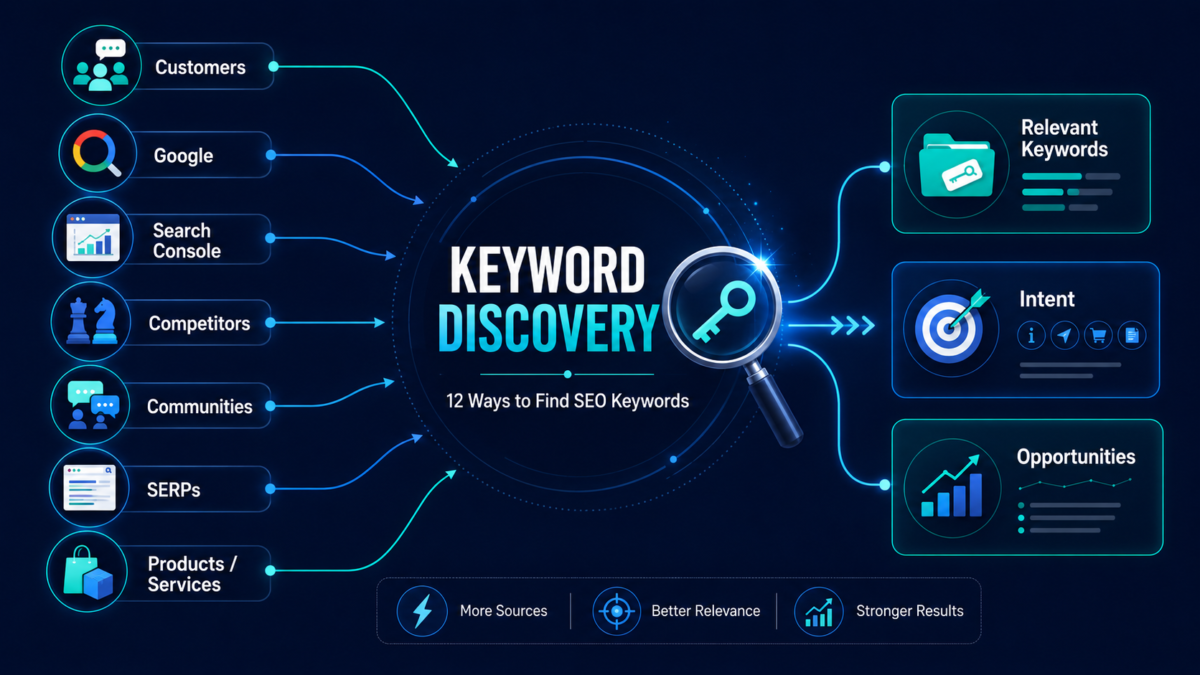
Step 3: Build Strong Keyword Research Skills
Keyword tools are useful.
But keyword research is not about exporting thousands of terms into a spreadsheet.
A good SEO professional learns how to distinguish between:
Search volume
and
strategic opportunity
You should learn how to evaluate:
- relevance
- intent
- difficulty
- business value
- page type
- topic relationships
- funnel stage
For example, a keyword with 500 searches may be significantly more valuable than one with 50,000 searches if it attracts people much closer to becoming customers.
Eventually, keyword research should become topic research.
Instead of asking:
Which keywords can I rank for?
ask:
Which subject should this website become genuinely useful for?
Step 4: Understand Website and Content Architecture
SEO becomes much easier when websites are logically organized.
Learn how concepts such as:
- categories
- pillars
- clusters
- supporting articles
- service pages
- internal links
work together.
A simple structure might look like:
Category → Pillar → Cluster → Supporting Article
For example:
SEO
→ SEO Foundations
→ Keyword Research
→ Technical SEO
→ On-Page SEO
Within SEO Foundations:
- SEO Fundamentals
- How Search Engines Work
- Search Intent
- SEO Strategy
- SEO Audits
- SEO Reporting
- SEO Forecasting
- SEO Testing
- SEO Ethics
- SEO Career Development
Architecture is not merely an organizational exercise.
It affects how users and search engines understand relationships between pages.
Step 5: Learn to Audit Websites
One of the fastest ways to improve your SEO skills is to audit real websites.
Auditing forces you to combine theory with diagnosis.
You begin asking questions such as:
- Are important pages indexed?
- Are URLs crawlable?
- Are internal links logical?
- Are there broken pages?
- Does content satisfy intent?
- Are canonicals correct?
- Are redirects necessary?
- Are key pages underlinked?
- Is the website measuring conversions?
Use the framework in the SEO Audit guide to develop a repeatable process.
Do not focus on finding the largest number of “errors.”
A good SEO audit prioritizes problems by impact.
That judgment is what separates an analyst from someone simply exporting a tool report.
Step 6: Build Your Own Website
If possible, create and grow your own website.
This can be one of the most valuable career decisions you make.
Your own website gives you a laboratory.
You can experiment with:
- WordPress
- site architecture
- keyword research
- publishing
- internal links
- technical SEO
- analytics
- Search Console
- images
- conversion tracking
Most importantly, you experience what happens after making decisions.
You may publish something you expect to perform well and discover that nobody searches for it.
You may optimize an old article and watch impressions increase.
You may accidentally create technical issues and learn how to fix them.
That experience is difficult to gain from courses alone.
Step 7: Learn to Create SEO Strategies
Eventually, you need to move beyond individual tasks.
A strategist asks:
What should we do first?
and:
Why?
A strong SEO strategy connects:
- business objectives
- audience needs
- search demand
- site architecture
- content
- technical SEO
- authority
- measurement
Suppose a company gives you a budget for 50 articles.
A junior practitioner may immediately start researching keywords.
A strategist first asks:
- What does the business sell?
- Who is the audience?
- Which topics support commercial goals?
- What already exists?
- Which technical problems could limit growth?
- Which topics should be prioritized?
This ability to prioritize becomes increasingly important as your career grows.
Step 8: Learn SEO Project Management
Knowing what should happen is different from making it happen.
SEO often involves:
- writers
- developers
- designers
- editors
- clients
- managers
- analysts
You need to learn how to convert strategy into execution.
A useful SEO project plan includes:
- objective
- tasks
- priorities
- owners
- deadlines
- dependencies
- deliverables
- KPIs
The SEO Project Planning guide provides a framework you can use.
Project management becomes especially important when working:
- in-house
- at an agency
- with developers
- on website migrations
- with enterprise websites
Many SEO recommendations fail not because the recommendation was wrong, but because implementation was poorly managed.
Step 9: Become Comfortable With Data
SEO professionals do not need to become data scientists.
But you should be comfortable using data to answer questions.
Learn how to interpret:
- clicks
- impressions
- CTR
- rankings
- landing pages
- conversion rates
- revenue
- traffic trends
A good SEO reporting process should help answer:
What happened?
Why might it have happened?
Does it matter?
What should we do next?
Avoid relying entirely on arbitrary SEO scores.
Tools are useful for gathering evidence.
Your value comes from interpreting that evidence.
Step 10: Learn Forecasting and Testing
As your skills improve, begin moving from reactive SEO toward evidence-based planning.
SEO Forecasting
Forecasting asks:
What might happen if we pursue this opportunity?
You might estimate:
- traffic
- leads
- conversions
- revenue
- content requirements
The SEO Forecasting guide explains why good forecasts use scenarios and assumptions rather than guarantees.
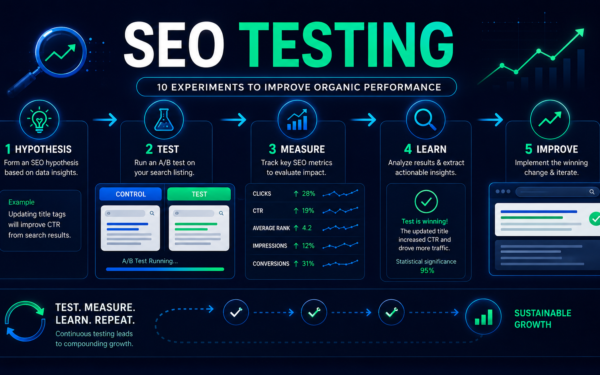
SEO Testing
Testing asks:
Did our change actually improve performance?
The SEO Testing guide covers experiments involving:
- titles
- internal links
- content
- search intent
- technical changes
- conversion actions
Learning forecasting and testing shifts your mindset.
Instead of:
This tactic works.
you begin saying:
Here is the hypothesis, here is the evidence, and here is what happened.
That is a much stronger professional skill.
Step 11: Practice Ethical SEO
SEO creates strong commercial incentives.
That means you will eventually encounter questionable tactics.
You may see:
- spam links
- mass-generated content
- hidden text
- doorway pages
- cloaking
- fake reviews
- copied content
- misleading reporting
Some tactics may appear to work temporarily.
That does not mean they are good long-term business decisions.
Understanding SEO ethics helps you evaluate tactics using questions such as:
- Does this help users?
- Does it accurately represent the page?
- Would I explain this publicly?
- Does it create unnecessary business risk?
- Is it sustainable?
Your reputation becomes increasingly valuable as your career grows.
Protect it.
Step 12: Document Your Results
One of the biggest career mistakes is doing good work without documenting it.
Start building evidence.
For every meaningful project, record:
The Situation
What was happening?
The Problem
What needed improvement?
The Analysis
What did you discover?
The Action
What did you change?
The Result
What happened afterward?
The Lesson
What would you do differently?
This becomes the foundation of your portfolio and case studies.
How to Get SEO Experience Without an SEO Job
This is one of the hardest problems beginners face.
Job listings may ask for experience.
But how do you get experience before getting the job?
There are several practical options.
Build Your Own Project
This is usually the safest starting point.
Create a website around a subject you understand or want to learn.
Then document:
- keyword research
- site architecture
- content publication
- indexing
- traffic
- experiments
The site does not need enormous traffic to demonstrate your thinking.
Help a Small Business
You might help:
- a family business
- a local store
- a friend
- a nonprofit
Focus on something manageable.
For example:
- optimize five service pages
- improve internal links
- fix indexing
- create a local content plan
Avoid promising results you cannot guarantee.
Create Practice Audits
Audit public websites without making changes.
Document:
- problems
- opportunities
- recommendations
- priorities
This demonstrates analytical ability.
Do not pretend the recommendations produced results if they were never implemented.
Volunteer
Some organizations have websites that receive little SEO attention.
Volunteering can provide experience while helping a genuine organization.
Make sure responsibilities are clear.
Build an SEO Portfolio
An SEO portfolio should demonstrate your thinking, not just show screenshots of rankings.
Useful portfolio items include:
Technical Audit
Show:
- issue
- evidence
- recommendation
- priority
Content Strategy
Show:
- audience
- topics
- architecture
- keyword ownership
Content Optimization
Show:
- original problem
- change
- result
Internal Linking Project
Show:
- original structure
- changes
- performance
Reporting Dashboard
Show how you transform data into decisions.
Case Study
Show the entire journey.
Protect confidential client information.
Never expose private data without permission.
What Should an SEO Case Study Include?
A strong case study might follow this structure:
Background
A local service website was receiving 3,500 monthly organic visits.
Problem
Several important service pages were poorly linked internally and did not match search intent well.
Research
An audit identified:
- weak internal links
- overlapping content
- poor titles
- missing supporting content
Strategy
The plan included:
- improving service pages
- consolidating overlapping articles
- building supporting guides
- strengthening internal links
Execution
Changes were implemented over three months.
Results
Report:
- impressions
- clicks
- leads
- conversion changes
Avoid manipulating dates or metrics to make the case study look stronger.
Credibility matters more than impressive percentages.
SEO Career Paths
SEO is not one job.
There are several career directions.
SEO Specialist
Works across multiple areas.
Common responsibilities:
- keyword research
- audits
- on-page SEO
- reporting
- content planning
This is a common early-career role.
Technical SEO Specialist
Focuses on:
- crawling
- indexing
- JavaScript
- migrations
- architecture
- structured data
- automation
Helpful skills may include:
- HTML
- CSS
- JavaScript basics
- Python
- SQL
- log analysis
Content SEO Specialist
Focuses on:
- keyword research
- search intent
- content briefs
- optimization
- editorial strategy
- internal linking
Strong writing and communication skills are valuable.
Local SEO Specialist
Works with:
- local businesses
- Google Business Profiles
- location pages
- reviews
- citations
- local search visibility
Ecommerce SEO Specialist
Focuses on:
- product pages
- categories
- faceted navigation
- internal linking
- structured data
- large-scale technical SEO
SEO Analyst
Works heavily with:
- data
- reporting
- forecasting
- dashboards
- experiments
SEO Manager
Combines SEO knowledge with:
- project management
- team leadership
- prioritization
- stakeholder communication
Head of SEO
Responsible for broader:
- strategy
- budgeting
- hiring
- forecasting
- performance
- organizational alignment
SEO Consultant
Works independently with clients.
Requires both SEO expertise and business skills such as:
- sales
- communication
- proposals
- scope management
- client retention
SEO Agency Owner
Adds another layer:
- hiring
- operations
- finance
- sales
- systems
- delivery
Being good at SEO does not automatically make someone good at running an agency.
Agency SEO vs In-House SEO
Both can build strong careers.
Agency SEO
Advantages can include:
- exposure to many industries
- many websites
- faster learning
- different technical problems
Challenges can include:
- multiple clients
- deadlines
- context switching
- communication demands
In-House SEO
Advantages can include:
- deeper understanding of one business
- longer-term projects
- greater access to internal data
Challenges can include:
- implementation dependencies
- organizational politics
- slower approvals
Neither is universally better.
Choose based on your goals and working style.
Freelance SEO
Freelancing can be attractive because it offers independence.
But SEO ability is only part of freelancing.
You also need:
- positioning
- sales
- proposals
- pricing
- contracts
- communication
- project management
Start with a clear service.
For example:
Weak positioning:
I do SEO.
Stronger positioning:
I help local service businesses improve organic visibility through technical audits, service-page optimization, and content strategy.
Specific positioning makes the service easier to understand.
SEO Skills to Learn
A well-rounded SEO professional should gradually develop skills across several areas.
Core SEO
- crawling
- indexing
- search intent
- keyword research
- on-page SEO
- internal linking
- backlinks
Technical
- HTML
- status codes
- robots.txt
- canonicals
- sitemaps
- JavaScript basics
- structured data
Content
- writing
- editing
- content briefs
- information architecture
Analytics
- Search Console
- analytics
- spreadsheets
- dashboards
- conversion tracking
Business
- prioritization
- forecasting
- communication
- strategy
- client management
Optional Advanced Skills
- SQL
- Python
- APIs
- automation
- log analysis
You do not need all of these immediately.
Build them progressively.
Should SEOs Learn HTML?
Yes.
You do not need to become a front-end developer, but basic HTML is extremely useful.
Understand elements such as:
<title>- headings
- links
- images
- canonical tags
- meta robots
- structured data
You should be comfortable reading page source and understanding how content is represented.
Should SEOs Learn Coding?
Coding is not mandatory for every SEO career.
But technical skills can expand what you can do.
For example, Python can help with:
- processing keyword lists
- analyzing crawls
- checking URLs
- automating repetitive work
- working with APIs
SQL can help with:
- large datasets
- analytics
- enterprise SEO
JavaScript knowledge can help you understand rendering problems.
Learn coding when it solves real problems rather than learning it because social media says every SEO must become a programmer.
Learn to Communicate SEO
Communication is one of the most underrated SEO skills.
A developer does not necessarily need a 70-page SEO theory presentation.
They may need:
Change these internal links from relative JavaScript actions to crawlable HTML links on this template.
An executive may not need to know every canonical issue.
They may need:
Approximately 18% of important category pages are being excluded from indexing, which limits organic visibility. Fixing the template is our highest-priority technical project this month.
Adjust the explanation to the audience.
The ability to translate technical problems into business language can accelerate your career.
Learn to Prioritize
You will almost always have more SEO opportunities than resources.
Suppose an audit finds:
- 200 missing meta descriptions
- five important noindexed pages
- 300 old images
- 20 broken internal links
What do you fix first?
Probably the important noindexed pages.
Good prioritization considers:
Impact × Urgency × Effort × Business Value
Senior SEO professionals often become valuable because they know what not to work on.
Learn From Google Search Console
For beginners, Search Console is one of the most useful places to develop analytical skills.
Ask questions such as:
- Which pages receive impressions?
- Which queries trigger them?
- Which pages are growing?
- Which pages are declining?
- Which queries rank between positions 5 and 20?
- Which pages have high impressions but weak CTR?
Then investigate.
Do not simply look at the graph.
Ask why it moved.
Learn From Search Results
SERPs are one of the best SEO classrooms available.
Pick a query.
Analyze:
- page types
- titles
- content formats
- search intent
- SERP features
- brands
- freshness
Then ask:
Why might these pages be useful for this query?
Avoid trying to reverse-engineer rankings from one factor.
SEO ranking systems are much more complicated than:
This article has 2,500 words, so we need 2,600.
Look at the full experience.
Learn to Question SEO Advice
SEO has many confident opinions.
You will encounter statements such as:
Google always prefers long-form content.
Every page needs exactly one H1.
You must publish every day.
AI content cannot rank.
Domain authority determines Google rankings.
Do not automatically accept claims.
Ask:
- Who is making the claim?
- What evidence supports it?
- Is it official guidance or opinion?
- Was it tested?
- Is the test relevant to this situation?
- Has the information become outdated?
This habit becomes increasingly important as the industry changes.
Do Not Chase Every Algorithm Update
Search updates matter.
But reacting emotionally to every ranking fluctuation can create poor decisions.
Instead:
- Confirm that a real decline occurred.
- Determine which pages were affected.
- Determine which queries changed.
- Check technical problems.
- Examine search intent.
- Compare competitors.
- Look for broader patterns.
Avoid immediately rewriting the entire website because someone posted a theory on social media.
Use AI as a Career Multiplier
AI can help SEO professionals work faster.
Potential uses include:
- summarizing data
- generating regex
- brainstorming
- organizing research
- clustering keywords
- drafting formulas
- analyzing content structures
But do not outsource your judgment.
If everyone has access to similar AI tools, your differentiator becomes:
- expertise
- strategy
- experience
- original data
- communication
- decision-making
AI should increase your leverage, not replace your understanding.
Keep an SEO Learning System
SEO changes continuously.
You need a sustainable way to learn.
Consider following:
- official search documentation
- search-engine announcements
- reliable industry publications
- experienced practitioners
But consumption alone is not learning.
A stronger system is:
Read → Apply → Measure → Document → Reflect
If you learn a new internal-linking strategy, test it.
If you read about crawling, inspect a real crawl.
If you learn about schema, implement and validate it.
Applied learning compounds much faster than passive reading.
Track Your Career Progress
Create a simple skill matrix.
For example:
| Skill | Beginner | Intermediate | Advanced |
|---|---|---|---|
| Keyword Research | ✓ | ||
| Search Intent | ✓ | ||
| Technical SEO | ✓ | ||
| Auditing | ✓ | ||
| Reporting | ✓ | ||
| Forecasting | |||
| SEO Testing | |||
| Client Communication |
Review it periodically.
Ask:
What skill would increase my professional value the most next?
This prevents random learning.
A 90-Day SEO Learning Plan
If you are beginning today, you could structure your first 90 days like this.
Days 1–30: Foundations
Learn:
- how search engines work
- crawling and indexing
- search intent
- keywords
- on-page SEO
- internal linking
Practice on your own website.
Days 31–60: Analysis
Learn:
- Search Console
- analytics
- technical auditing
- site architecture
- reporting
Audit your website and fix real problems.
Days 61–90: Strategy
Learn:
- SEO strategy
- project planning
- forecasting
- testing
Create:
- one SEO strategy
- one audit
- one content plan
- one report
By the end of 90 days, you should have more than certificates.
You should have evidence of practice.
Common SEO Career Mistakes
Learning Without Practicing
Courses can teach concepts.
Real websites teach consequences.
Practice.
Becoming Tool Dependent
Do not become someone who cannot perform SEO without one specific platform.
Understand the underlying concept first.
Chasing Certificates
Certifications can demonstrate learning effort.
They do not replace results.
Specializing Too Early
Understand the broader SEO ecosystem before narrowing your focus.
Ignoring Business Outcomes
Rankings matter because they can create visibility and business value.
Learn how SEO connects with conversions.
Refusing to Learn Technical Concepts
Even content-focused SEOs should understand basic crawling, indexing, status codes, and canonicals.
Ignoring Communication Skills
Being correct does not help if nobody understands or implements your recommendation.
Promising Rankings
You do not control search-engine results.
Avoid guarantees you cannot control.
Copying Other SEOs
Learn from experienced professionals.
Then develop your own evidence and perspective.
What Makes an SEO Professional Valuable?
The most valuable SEO professional is not necessarily the person who knows the most terminology.
It is usually the person who can:
- understand the business
- identify the real problem
- find evidence
- prioritize the opportunity
- recommend a practical solution
- help implement it
- measure the outcome
- communicate the result
That is professional SEO.
SEO Career Checklist
Before applying for serious SEO roles, try to become comfortable with the following.
Fundamentals
- crawling
- indexing
- ranking
- search intent
- keywords
On-Page SEO
- titles
- headings
- content
- URLs
- internal links
Technical SEO
- status codes
- robots.txt
- canonicals
- sitemaps
- basic performance
Research
- keyword research
- competitor analysis
- SERP analysis
Measurement
- Search Console
- analytics
- conversions
- reporting
Strategy
- prioritization
- content architecture
- project planning
Professional Skills
- writing
- communication
- documentation
- problem solving
Evidence
- personal website
- audit
- case study
- portfolio
- measurable results
You do not need to be an expert in everything before applying for jobs.
You need enough understanding to contribute and enough curiosity to keep improving.
Final Thoughts
A successful SEO career is not built by memorizing hundreds of ranking factors.
It is built through a repeatable learning cycle:
Learn → Practice → Measure → Document → Improve → Repeat
Start with the fundamentals.
Understand how search engines work.
Study search intent.
Learn keyword research.
Build websites.
Audit them.
Create strategies.
Measure performance.
Run experiments.
Document your results.
Communicate what you learned.
And keep your work grounded in ethical, sustainable practices.
Your first SEO project will not be perfect.
Your first audit will miss things.
Your first forecast will contain weak assumptions.
Your first experiment may be inconclusive.
That is part of becoming good at the work.
SEO rewards curiosity.
The professionals who keep learning, testing, analyzing, communicating, and building real experience are the ones who gradually become difficult to replace.
Do not focus only on becoming someone who knows SEO.
Work toward becoming someone who can use SEO to solve real problems.