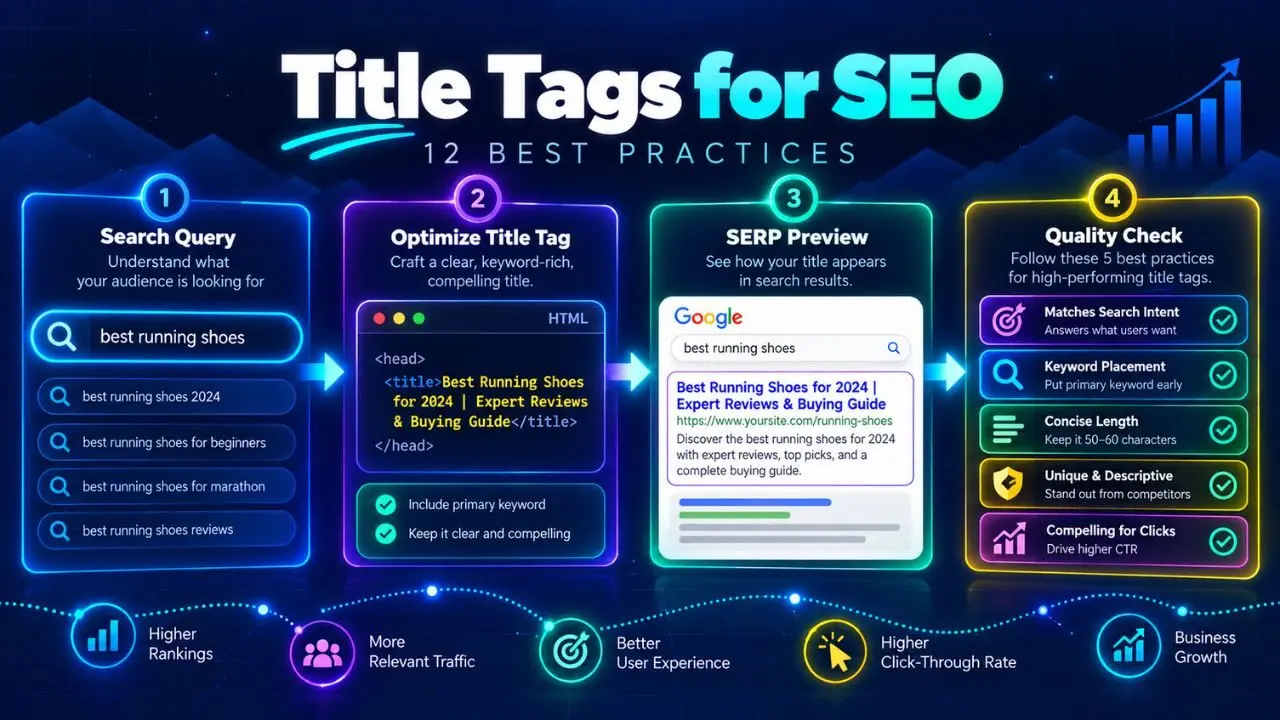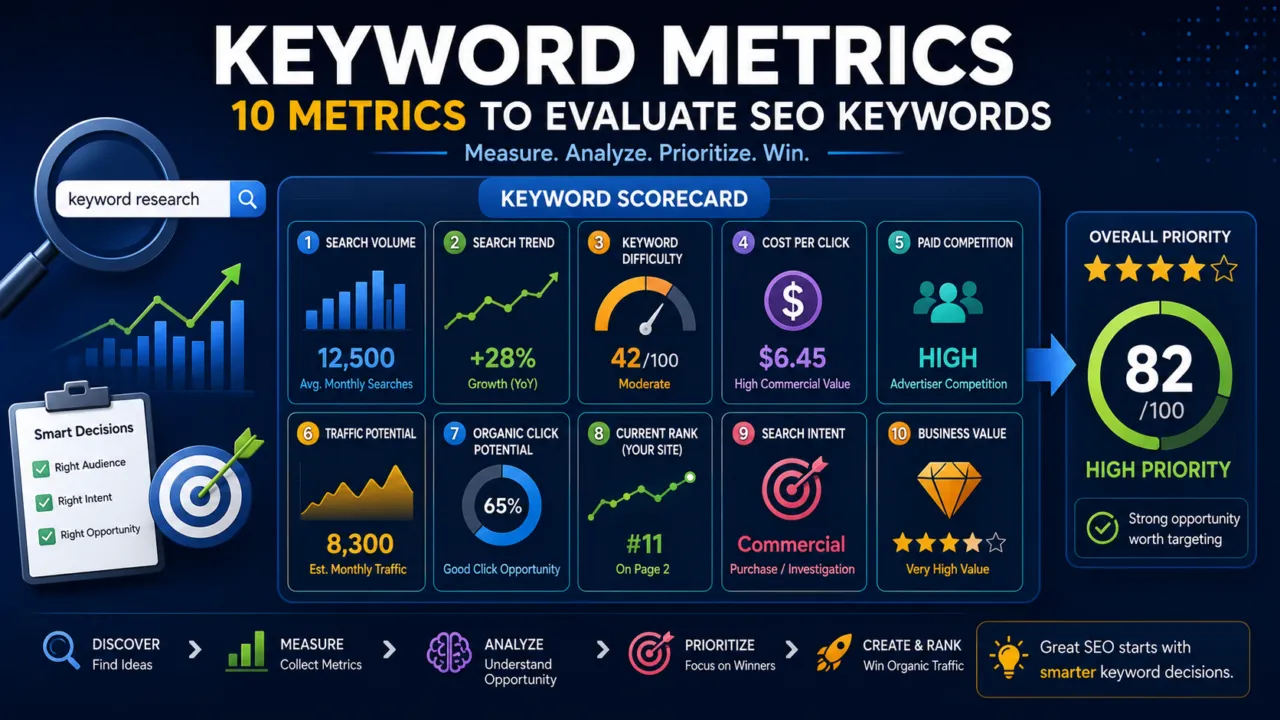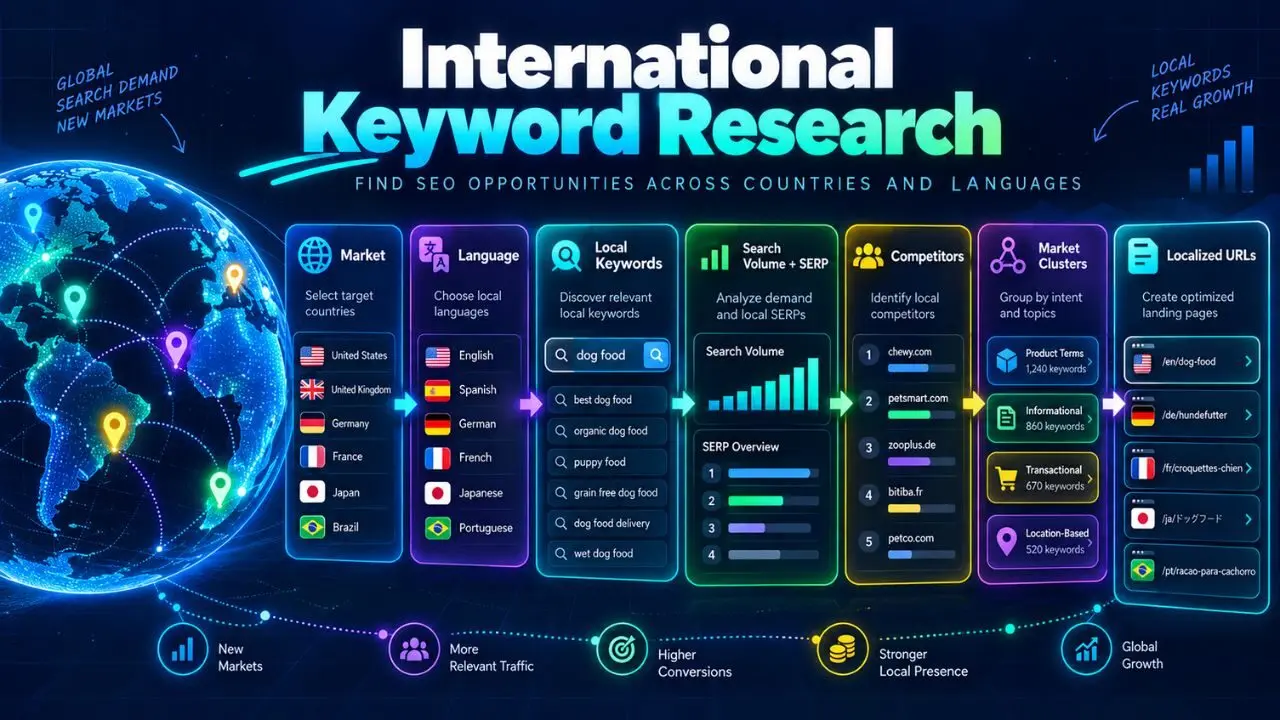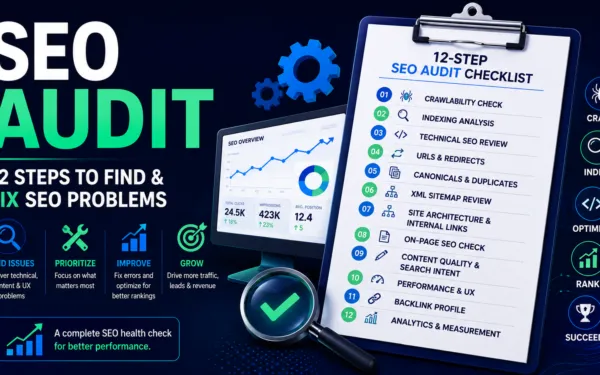


Keyword research can tell you what people search for.
It cannot, by itself, tell you what type of page should rank.
That is why SERP analysis is one of the most important steps between keyword research and content creation.
SERP stands for Search Engine Results Page.
A SERP analysis examines the pages, features, formats, competitors, and patterns appearing in search results for a particular query.
Instead of asking only:
How many people search for this keyword?
SERP analysis asks:
- What does the search engine appear to believe users want?
- What kinds of pages are ranking?
- Which websites dominate the results?
- Is the intent informational, commercial, local, or transactional?
- Are the results fresh or evergreen?
- Are there videos, products, maps, forums, or other SERP features?
- How strong are the ranking pages?
- Is there a realistic opportunity for my website?
- What would a better page need to provide?
A keyword may look attractive inside a research tool but become far less appealing once you inspect the actual search results.
Likewise, a keyword with a high difficulty score may contain weak or outdated results that create a genuine opportunity.
That is why good SEO research should eventually move from spreadsheets to the SERP itself.
A practical workflow looks like:
Keyword → Search Intent → SERP Analysis → Competitor Evaluation → Content Decision → Keyword Mapping
This guide explains how to perform a SERP analysis step by step, what to look for, how to evaluate competitors, and how to use the findings to create better SEO pages.
What Is SERP Analysis?
SERP analysis is the process of examining search-engine results for a keyword to understand:
- search intent
- ranking page types
- competing websites
- content formats
- SERP features
- topical patterns
- ranking difficulty
- click opportunities
The objective is not simply to look at which website ranks first.
The objective is to understand why the result set looks the way it does.
Imagine researching:
keyword clustering
A keyword tool may provide:
- search volume
- difficulty
- CPC
- trend
Useful data.
But when you search the query, you may discover that the results are dominated by:
- educational guides
- SEO tool companies
- workflow tutorials
- software documentation
That tells you something the keyword metrics alone cannot:
The query currently favors informational, instructional content.
Now consider:
keyword clustering tool
The SERP may be dominated by:
- software products
- free tools
- landing pages
- comparison pages
The topic is similar.
The expected page type is different.
SERP analysis exposes that distinction.
Why SERP Analysis Matters
SERP analysis helps prevent a common SEO mistake:
creating the wrong page for the right keyword.
You may correctly identify a relevant keyword but still fail because the format does not match what users expect.
For example:
Query
best keyword research tools
Wrong Page
A 5,000-word article explaining what keyword research means.
Better Match
A comparison guide evaluating keyword research tools.
The keyword is relevant in both cases.
The search intent is not.
Your Search Intent guide explains the intent framework in detail. SERP analysis is where that framework becomes practical.
SERP Analysis Validates Keyword Research
Keyword research tools estimate opportunity.
Search results reveal current reality.
A keyword may look easy because:
- difficulty score is low
- search volume is moderate
- CPC is attractive
But the SERP may contain:
- government sites
- major brands
- strong specialist publishers
- excellent pages
- dominant SERP features
That changes the competitive picture.
Your Keyword Difficulty guide explains why tool scores should be treated as starting points rather than final decisions.
SERP analysis supplies the missing context.
12 Steps to Perform a SERP Analysis
Step 1: Define the Keyword and Market
Start with a clearly defined query.
Also define:
- location
- language
- device where relevant
- target audience
Search results can differ by market.
For example:
SEO consultant
may produce different results in:
- Pakistan
- United States
- United Kingdom
- UAE
Local intent can change the SERP dramatically.
The keyword alone is not enough.
You need to understand which search environment matters to your audience.
Step 2: Identify the Dominant Search Intent
Look at the top results.
Ask:
What are most of these pages trying to help the user accomplish?
Common patterns include:
Informational
Guides, tutorials, definitions, educational resources.
Commercial Investigation
Comparisons, reviews, “best” lists, alternatives.
Transactional
Product, service, signup, or purchase pages.
Navigational
Official brand or destination pages.
Local
Maps, local businesses, location-specific services.
Do not rely only on the wording of the keyword.
The SERP itself is one of the strongest clues about intent.
Example
Keyword:
SEO audit
Possible result types:
- SEO audit tools
- audit guides
- audit services
- templates
If several intents appear together, the query may have mixed intent.
That affects how you should approach the page.
Step 3: Identify the Ranking Page Types
Now classify the actual results.
Examples:
- blog article
- product page
- category page
- service page
- homepage
- tool
- forum
- video
- documentation
- landing page
- comparison article
Suppose the top 10 for:
keyword mapping
contains nine educational guides.
Publishing a commercial service page for that query may be difficult.
The result set strongly indicates users want to learn.
Page Type Is a Strategic Signal
Before creating a page, ask:
Can we realistically produce the type of resource this SERP rewards?
If the SERP wants a calculator and you can only create an article, reconsider the target.
Step 4: Analyze Content Format
Page type and content format are related but different.
A blog article may be structured as:
- complete guide
- checklist
- tutorial
- list
- case study
- comparison
- definition
- template
For example:
how to do keyword research
may favor:
step-by-step tutorials
while:
keyword research checklist
may favor:
checklists and downloadable resources
The topic is similar.
The format expectation changes.
Look for repeated patterns among ranking pages.
If seven of the top ten results are checklists, that pattern deserves attention.
Step 5: Analyze the Content Angle
The angle is the perspective or promise used by ranking pages.
Common angles include:
- for beginners
- step by step
- complete guide
- free
- advanced
- with examples
- for small business
- updated for the current year
Example:
Keyword:
SEO strategy
Ranking titles might emphasize:
- step-by-step strategy
- beginner strategy
- strategy templates
- frameworks
These angles tell you how competitors position the topic.
Do not simply copy the most common wording.
Ask:
Which angle genuinely helps our audience?
Step 6: Review SERP Features
Modern search results contain much more than traditional blue links.
You may encounter:
- paid advertisements
- local packs
- image results
- videos
- shopping results
- discussion/forum results
- featured information
- related searches
- knowledge panels
- news results
- AI-generated search experiences where available
SERP features influence organic click potential.
Imagine:
Keyword A
50,000 searches
but most visible space is occupied by:
- ads
- shopping
- maps
- videos
Now:
Keyword B
10,000 searches
with mostly traditional organic results.
Keyword B might create better organic click opportunity.
This is why your Keyword Metrics guide separates search demand from click potential.
Step 7: Analyze Who Ranks
Record the domains appearing repeatedly.
Classify them.
For example:
Major Authority Sites
Large established publishers or brands.
Specialist Sites
Websites focused deeply on the topic.
Direct Business Competitors
Companies competing for the same customers.
User-Generated Platforms
Forums or communities.
Official Sources
Government, platform, or documentation sites.
A SERP dominated by authoritative official resources is different from one filled with small independent websites.
However, do not evaluate domain strength alone.
A powerful domain can rank with a weak page.
Always evaluate the individual result.
Step 8: Evaluate the Ranking Pages
Open the strongest results.
Look at:
- content depth
- structure
- examples
- visuals
- original data
- usability
- internal links
- external sources
- freshness
- page experience
Ask:
Why might this page satisfy the search better than others?
Look for Strengths
Examples:
- excellent examples
- original data
- strong screenshots
- clear framework
- useful tool
- detailed process
Look for Weaknesses
Examples:
- outdated information
- weak introduction
- no practical examples
- generic AI-like explanations
- missing subtopics
- poor formatting
- excessive promotion
Those weaknesses can create opportunities.
Step 9: Evaluate Topical Authority
A page rarely exists in isolation.
Look at the ranking websites.
Do they have supporting content around the subject?
For a page about keyword research, the website may also cover:
- seed keywords
- long-tail keywords
- search intent
- keyword difficulty
- keyword clustering
- competitor research
- keyword mapping
This creates a broader topical ecosystem.
Your own Keyword Research pillar follows the same logic.
You have been building:
Keyword Discovery → Seed Keywords → Long-Tail Keywords → Keyword Metrics → Keyword Difficulty → Keyword Clustering → Competitor Keyword Research → Content Gap Analysis → SERP Analysis
Each page strengthens the context around the pillar.
Step 10: Evaluate Link and Authority Signals
Backlinks are one part of SERP competition.
Review page-level signals where available.
Ask:
- Do ranking pages have many referring domains?
- Are those links relevant?
- Are they editorial?
- Are most links pointing to the page or merely the domain?
If every top result has substantial high-quality link authority, the keyword may require more resources.
But backlinks should never be evaluated alone.
A page can compete because of:
- intent alignment
- topic relevance
- content quality
- brand authority
- internal links
Use authority as one part of the analysis.
Step 11: Identify the Content Gap
After reviewing the results, ask:
What is missing from the current SERP?
Possible gaps include:
Information Gap
Competitors omit an important explanation.
Experience Gap
Pages lack firsthand examples.
Evidence Gap
Claims are unsupported.
Visual Gap
Complex processes lack diagrams or screenshots.
Freshness Gap
Information is outdated.
Tool Gap
Users need a template, calculator, or interactive resource.
Audience Gap
Existing content is too generic.
Your Content Gap Analysis guide explains how to turn these missing elements into actionable SEO opportunities.
A gap is not simply:
Competitors have 2,000 words, so we should write 3,000.
The goal is to provide something more useful—not merely longer.
Step 12: Make the SEO Decision
After completing the analysis, choose an action.
Possible decisions include:
Target Now
The SERP looks realistic and valuable.
Build Supporting Authority First
The topic is valuable but your site needs more depth.
Improve an Existing Page
You already have a partially relevant URL.
Choose a Different Format
The SERP suggests a tool, comparison, or landing page rather than an article.
Deprioritize
The opportunity is too weak or irrelevant.
Do Not Target
The intent does not align with your business.
A good SERP analysis should end with a decision.
The Three Cs of SERP Analysis
A simple framework for analyzing organic results is:
Content Type → Content Format → Content Angle
Content Type
What type of page ranks?
Examples:
- blog
- product
- category
- service
- tool
Content Format
How is the information delivered?
Examples:
- guide
- checklist
- tutorial
- list
- comparison
Content Angle
What positioning appears repeatedly?
Examples:
- beginner
- advanced
- free
- fast
- comprehensive
These three signals help you identify what searchers likely expect.
They should guide your planning, not force you to copy competitors.
SERP Analysis and Search Intent
Search intent is often inferred from results.
Consider:
keyword research tools
If results are dominated by:
- software pages
- tool comparisons
- free keyword tools
that indicates commercial/tool-selection intent.
Now consider:
how keyword research works
If results are dominated by:
- tutorials
- guides
- educational resources
the intent is informational.
SERP analysis turns intent from theory into observable evidence.
SERP Analysis and Keyword Difficulty
Keyword difficulty tools attempt to summarize competition into a score.
SERP analysis asks:
What does the competition actually look like?
A tool may say:
Difficulty: 72
But when you inspect the results, you may find:
- several outdated pages
- poor intent alignment
- forum posts
- weak niche sites
That could create an opportunity.
Alternatively:
Difficulty: 25
may look easy.
But the results could include:
- official documentation
- highly specialized tools
- perfect intent alignment
The query may be harder than the score suggests.
Always inspect the SERP before making important targeting decisions.
SERP Analysis and Keyword Clustering
SERP overlap can help determine whether two keywords belong on the same page.
Consider:
Keyword A
SERP analysis
Keyword B
how to analyze Google search results
If many of the same pages rank for both queries, that suggests shared intent.
Now compare:
Keyword C
SERP analysis tool
If the results are mostly software products rather than guides, that query may belong in another cluster.
Your Keyword Clustering guide explains how SERP overlap can validate semantic keyword groups.
SERP Analysis and Competitor Keyword Research
Competitor keyword research identifies who ranks.
SERP analysis explains why those pages may be competitive.
Your Competitor Keyword Research guide helps identify:
- competitor queries
- ranking URLs
- keyword gaps
SERP analysis then evaluates:
- page type
- intent
- format
- content quality
- authority
Together, these processes provide much better competitive intelligence than keyword exports alone.
SERP Analysis for New Websites
New websites should be realistic about competition.
When inspecting a SERP, look for opportunities such as:
- smaller specialist websites
- outdated pages
- weak content
- narrow long-tail queries
- missing examples
At the same time, do not avoid foundational topics simply because major brands rank.
You still need the core content required to build topical context.
The balance is:
Foundational Content + Realistic Supporting Opportunities
SERP Analysis for Existing Websites
Existing websites have more data.
Before targeting a keyword, check:
- whether an existing page already ranks
- current position
- impressions
- clicks
- related queries
For example:
Your current page:
Position 13
Competitor page:
Position 4
This may be an optimization opportunity rather than a new content opportunity.
Review:
- content differences
- intent
- title
- internal links
- backlinks
- freshness
Your SEO Reporting guide provides the measurement framework for this.
SERP Analysis for Ecommerce
Ecommerce queries often produce mixed result types.
A product query may show:
- category pages
- products
- shopping results
- reviews
- marketplaces
Analyze what dominates.
For example:
trail running shoes
may favor category pages.
Creating a blog article titled:
Complete Guide to Trail Running Shoes
may not be the best primary target for that exact query.
The correct page type may be a product category.
SERP Analysis for SaaS
SaaS SERPs often reveal clear intent patterns.
For example:
Query
CRM software
Potential results:
- SaaS product pages
- comparison websites
- review platforms
Query
what is CRM
Potential results:
- educational guides
- definitions
Query
Salesforce alternatives
Potential results:
- comparison articles
- alternative software lists
Each query belongs to a different stage of the customer journey.
Your content architecture should reflect that.
SERP Analysis for Local SEO
Local searches require special attention.
A local SERP may contain:
- map pack
- directories
- local service pages
- review websites
For:
dentist near me
a generic informational article is unlikely to match intent.
Users want a local provider.
Analyze:
- map visibility
- local businesses
- review prominence
- local landing pages
Local search intent can override traditional content-analysis assumptions.
SERP Analysis for B2B
B2B queries often have lower volume but higher business value.
A query such as:
CRM for manufacturing companies
may have a relatively small search market.
But the SERP can reveal:
- industry-specific software
- comparison pages
- enterprise product pages
Your analysis should focus on:
- audience specificity
- buyer stage
- page type
- commercial intent
Traffic volume alone is not enough.
SERP Volatility
Search results change.
A SERP may be stable for months.
Another may change frequently.
Volatility can indicate:
- unclear search intent
- rapidly evolving topics
- strong competition
- changing ranking systems
If rankings shift dramatically, avoid assuming the current top ten represents a permanent model.
Look for recurring patterns rather than copying one moment in time.
Freshness in SERP Analysis
Some queries clearly reward recent information.
Examples may include:
- annual statistics
- software recommendations
- pricing
- trends
- current platform features
Look at ranking-page dates.
If nearly all top results are recent, freshness likely matters.
Your content strategy should then include regular updates.
For evergreen queries, freshness may be less important than completeness and usefulness.
SERP Analysis and AI Search
Search experiences are evolving.
Users may receive more direct answers within the results page.
This can affect:
- click-through rates
- query behavior
- content formats
The practical response is not to abandon SEO.
It is to make content more valuable.
Create assets that offer reasons to visit the page:
- original research
- practical templates
- detailed examples
- calculators
- visuals
- experience-based guidance
Generic information is easier to summarize directly in search results.
Unique value remains harder to replace.
How to Document a SERP Analysis
Do not rely on memory.
Create a simple worksheet.
For each target keyword, record:
| Field | Example |
|---|---|
| Keyword | SERP analysis |
| Intent | Informational |
| Page Type | Blog Guide |
| Format | Step-by-Step |
| Angle | Practical |
| Top Competitors | Site A, B, C |
| SERP Features | Videos, discussions |
| Difficulty | Medium |
| Content Gap | Examples + framework |
| Decision | Create Guide |
This makes SERP research repeatable.
Create a SERP Opportunity Score
You can score each factor from 1–5:
Intent Fit
Can you satisfy the search?
Content Opportunity
Can you create something better?
Authority Fit
Can your site realistically compete?
Business Value
Does the query matter commercially or strategically?
Click Potential
Are organic results likely to receive useful traffic?
Example:
| Factor | Score |
|---|---|
| Intent Fit | 5 |
| Content Opportunity | 4 |
| Authority Fit | 3 |
| Business Value | 5 |
| Click Potential | 4 |
Total:
21/25
This does not make the decision scientific.
It makes the reasoning visible.
Common SERP Analysis Mistakes
Looking Only at Position One
Analyze the entire first page.
Looking Only at Domain Authority
Page-level quality matters.
Copying Top-Ranking Content
Understand patterns, then add original value.
Ignoring Search Intent
A strong page in the wrong format can still fail.
Ignoring SERP Features
Rankings do not guarantee clicks.
Assuming More Words Means Better
Depth matters more than length.
Ignoring Business Value
A weak commercial fit may not deserve effort.
Ignoring Existing Pages
You may already have a URL worth improving.
Trusting Keyword Difficulty Alone
Tool scores are estimates.
Failing to Make a Decision
Analysis should lead to action.
Practical SERP Analysis Workflow
Use this process before creating important SEO content:
1. Search the Keyword
Use the relevant market and language.
2. Identify Search Intent
Understand the user’s likely goal.
3. Classify Page Types
Guide, product, category, tool, service, etc.
4. Identify Content Formats
Tutorial, checklist, comparison, definition, template.
5. Review Content Angles
Beginner, advanced, current, free, etc.
6. Record SERP Features
Ads, maps, videos, discussions, shopping, and other features.
7. Analyze Competitors
Review domains and individual pages.
8. Review Authority Signals
Consider backlinks and topical depth.
9. Look for Gaps
Find missing value.
10. Evaluate Business Fit
Decide whether the traffic matters.
11. Assess Feasibility
Can your website realistically compete?
12. Choose the Action
Create, improve, wait, or avoid.
SERP Analysis Checklist
Before targeting a keyword, confirm:
Intent
- dominant intent identified
- mixed intent considered
- audience understood
Page Type
- ranking page types reviewed
- appropriate page type selected
Format
- dominant content format identified
- expected structure understood
SERP Features
- ads reviewed
- maps reviewed where relevant
- videos or other features considered
- organic click opportunity evaluated
Competition
- top ranking domains reviewed
- individual pages analyzed
- backlink signals considered
- topical authority considered
Content Opportunity
- competitor strengths documented
- competitor weaknesses documented
- original-value opportunity identified
Website Fit
- existing content checked
- current rankings reviewed
- topical authority assessed
Business
- relevance confirmed
- business value evaluated
- conversion potential considered
Decision
- target now
- improve existing page
- build authority first
- choose different format
- deprioritize
Final Thoughts
SERP analysis is where keyword research meets reality.
Keyword tools help you understand:
- demand
- difficulty
- trends
- commercial signals
The SERP helps you understand:
- intent
- page type
- format
- competitors
- click environment
- content expectations
A useful process looks like:
Keyword → Intent → SERP → Competitors → Gap → Feasibility → Decision
Do not publish a page simply because a keyword has volume.
Study what searchers are being shown.
Understand what those results imply.
Identify what is missing.
Then decide whether your website can create something genuinely useful enough to compete.
Once the SERP confirms that a keyword deserves a page, the next step is to assign that keyword cluster to the correct URL through keyword mapping.